Showing posts with label Family. Show all posts

Thursday, December 24, 2009

Another Christmas in Tulsa!


I'm spending a second Christmas in Tulsa with my niece Cindy and her family. How fortunate I am to have at least the remnants of a family to spend the holidays with! Being old and childless can send me into a deep depression, so Cindy's invitation is wonderful. My brother (Cindy's father) comes here from Utah, and we always have a good, if quiet, time.
There comes a time when the old childhood home is gone, the parents are long gone, and it's time for new traditions. Cindy loves Christmas; she always has a lovely tree surrounded by a lot of presents, and she cooks up a storm. Her food is too tempting for my fat body, but it's certainly enjoyable.
I seldom do any decorating or gift buying on my own, so I really appreciate this new holiday tradition, transported here from Houston, where Cindy used to live. Even as we wait for a predicted snow storm, the fireplaces burn cheerfully and the Christmas carols play. I can feel a bit of Christmas spirit just beginning to affect me. Happy holidays to all, and a great 2010!

Thursday, November 26, 2009

Thanksgiving Again!

Last Thanksgiving, I wrote about enjoying a Healthy Choice frozen turkey dinner in the privacy of my condo. This year, I'll be having dinner here at The Clare; the menu seems to include almost everything. This year, my problem will be trying not to eat too much to sabotage my recent weight loss. I still have a lot of weight to lose. I still remember Thanksgivings past, most of them fondly, so I have decided to repeat my 2007 post, also repeated last year.

"I remember the hot kitchen, the wonderful smells, my grandma in her white "cooking dress" making sure that everything was just right. I remember the spotless white linen tablecloth and napkins, the polished silver, the gleaming china and crystal, the place settings arranged just right, no fork out of place.I remember the small family gathered about, just five of us, my father silent as usual, my mother trying to be helpful despite her barely-disguised dislike of her mother-in-law. I remember my brother impatiently waiting for the food, eager to escape to a more active atmosphere somewhere, perhaps a ball game with his friends if the weather was good. I remember sneaking just one more chocolate from the Whitman’s Sampler box that was a holiday tradition. I had no fear of "spoiling" my gigantic appetite when I was surrounded by such great smells!

'I remember my own little apartment kitchen, my husband struggling to cook everything on the tiny stove and in the tiny oven while I tried to find places for all the mismatched plates on the long, makeshift table with the slightly stained gold permanent press tablecloth. The napkins were paper.I remember the crowd of ten or twelve crammed into the little apartment, mostly the single patrons of my husband’s bar who had nowhere else to go for the holiday. Family Thanksgivings had been a tradition in my husband’s family, so this was an important day for him. I was as inept at cooking then as I am now, but he did it enthusiastically. Most of the guests were men, and they ate every crumb of food. We seldom had leftovers in those years. A few guests fell asleep immediately after dinner, usually on the floor if any space was available there.
We continued this Thanksgiving dinner tradition for several years after we moved to our house nearby. It was not a large house, but we filled it with good food and holiday joy for many of the same guests, and a few more.

"I remember the year when we finally ran out of friends to invite for Thanksgiving dinner; everyone had a family and lived in the suburbs by then, while we were still a city family of two. We made reservations for dinner at the Signature Room at the top of the John Hancock Center. It seemed very expensive to my frugal husband, but he ultimately enjoyed the experience. We ate so much at the sumptuous buffet that we couldn’t eat much of the small turkey provided for us, so we took it home (as advertised and recommended). Jules made turkey soup and turkey sandwiches enough to last at least a week. I think we got our money’s worth that year.

"I remember our last Thanksgiving together in 1999. It was also my last Thanksgiving with my mother, who was eighty-eight years old by then and living in a retirement condo in Northfield, Minnesota. My nephew and his wife cooked dinner at their house, and two grand-nieces were there as well. The food was fine, but I remember little about it. My mother lived on until this year, and I always sent her flowers for Thanksgiving. However, I didn’t join her in Northfield for the holiday again.

"I remember mostly that my husband was not feeling well on Thanksgiving, 1999, that he left immediately after dinner to return to the motel to rest. That was very uncharacteristic of him; he was usually the life of the party. I was very worried. He seemed to feel better later, but it wasn’t long after our return home that his pancreatic cancer was diagnosed. He would die in March of the following year.

"I remember later Thanksgivings with a friend’s family, including her husband and her two daughters. That tradition, begun when Jules was still alive, ended when one of my friends’ daughters moved away and her parents began to visit her for Thanksgiving. I understood.

"This year [2007], I’ll enjoy my Lean Cuisine turkey dinner, watch parades on television, read, write, and feel content. I may even open a bottle of Chardonnay. I’ve come to terms with the changes brought by aging and the passing of time and loved ones, and it’s all right. However, I am happy to remember those Thanksgivings from the past and many more, the good and the bad. Life goes on."

Tuesday, December 30, 2008

Holiday Reflections

I'm happy to report that I am now back home. It was an easy trip, quite unlike my snowy experience on December 23. As I look back on my holiday excursion, I have come to a few conclusions:

1. People are basically kind and helpful. Drivers, wheelchair attendants, even security screeners went beyond their basic duties for this temporaarily handicapped traveler and remained cheerful. Strangers offered help on several occasions: offers to get food and water as I waited hours in my wheelchair at the gate in Chicago; early boarding help when the plane finally arrived.

2. Having family is wonderful. Childless as I am, I often forget how nice it is to have relatives invite me for the holidays, even when I am far from my best. I guess relatives accept one in any condition. Many thanks to my niece Cindy, her husband Scott, and their daughter Lauren. They kept me comfortable and too well fed, and even pushed me around during a museum visit.

3. Holiday travel is filled with difficulties, including crowds and bad weather, but it's worth doing. I'm very glad I opted not to spend Christmas alone in my condo worrying about my problems. I've come back rejuvenated and ready to face whatever comes.

I'm happy to report that I'm walking a bit better (I still have four weeks of therapy to go, and it was interrupted by the holidays). Today, I visit my new residence at The Clare for the first time. A report will be forthcoming.

Thursday, November 27, 2008

Thanksgivings Past and Present

As this year's Healthy Choice turkey dinner awaits in my freezer and the organizers of Chicago's Thanksgiving Day parade prepare for their 8:00 a.m. step-off, I have decided to rerun last year's post about Thanksgiving memories. This has been a trying year, but I take comfort in reviewing Thanksgivings past and present, joyous and not, in the hope that next year will be better. Happy Thanksgiving to all!

Here is what I wrote last year:

"I remember the hot kitchen, the wonderful smells, my grandma in her white "cooking dress" making sure that everything was just right. I remember the spotless white linen tablecloth and napkins, the polished silver, the gleaming china and crystal, the place settings arranged just right, no fork out of place.I remember the small family gathered about, just five of us, my father silent as usual, my mother trying to be helpful despite her barely-disguised dislike of her mother-in-law. I remember my brother impatiently waiting for the food, eager to escape to a more active atmosphere somewhere, perhaps a ball game with his friends if the weather was good. I remember sneaking just one more chocolate from the Whitman’s Sampler box that was a holiday tradition. I had no fear of "spoiling" my gigantic appetite when I was surrounded by such great smells!

"I remember my own little apartment kitchen, my husband struggling to cook everything on the tiny stove and in the tiny oven while I tried to find places for all the mismatched plates on the long, makeshift table with the slightly stained gold permanent press tablecloth. The napkins were paper.I remember the crowd of ten or twelve crammed into the little apartment, mostly the single patrons of my husband’s bar who had nowhere else to go for the holiday. Family Thanksgivings had been a tradition in my husband’s family, so this was an important day for him. I was as inept at cooking then as I am now, but he did it enthusiastically. Most of the guests were men, and they ate every crumb of food. We seldom had leftovers in those years. A few guests fell asleep immediately after dinner, usually on the floor if any space was available there.

"We continued this Thanksgiving dinner tradition for several years after we moved to our house nearby. It was not a large house, but we filled it with good food and holiday joy for many of the same guests, and a few more.

"I remember the year when we finally ran out of friends to invite for Thanksgiving dinner; everyone had a family and lived in the suburbs by then, while we were still a city family of two. We made reservations for dinner at the Signature Room at the top of the John Hancock Center. It seemed very expensive to my frugal husband, but he ultimately enjoyed the experience. We ate so much at the sumptuous buffet that we couldn’t eat much of the small turkey provided for us, so we took it home (as advertised and recommended). Jules made turkey soup and turkey sandwiches enough to last at least a week. I think we got our money’s worth that year.

"I remember our last Thanksgiving together in 1999. It was also my last Thanksgiving with my mother, who was eighty-eight years old by then and living in a retirement condo in Northfield, Minnesota. My nephew and his wife cooked dinner at their house, and two grand-nieces were there as well. The food was fine, but I remember little about it. My mother lived on until this year, and I always sent her flowers for Thanksgiving. However, I didn’t join her in Northfield for the holiday again.

"I remember mostly that my husband was not feeling well on Thanksgiving, 1999, that he left immediately after dinner to return to the motel to rest. That was very uncharacteristic of him; he was usually the life of the party. I was very worried. He seemed to feel better later, but it wasn’t long after our return home that his pancreatic cancer was diagnosed. He would die in March of the following year.

"I remember later Thanksgivings with a friend’s family, including her husband and her two daughters. That tradition, begun when Jules was still alive, ended when one of my friends’ daughters moved away and her parents began to visit her for Thanksgiving. I understood.

"This year [2007], I’ll enjoy my Lean Cuisine turkey dinner, watch parades on television, read, write, and feel content. I may even open a bottle of Chardonnay. I’ve come to terms with the changes brought by aging and the passing of time and loved ones, and it’s all right. However, I am happy to remember those Thanksgivings from the past and many more, the good and the bad. Life goes on."

Co9pyright 2008 by Marlys Marshall Styne

Sunday, September 07, 2008

Thoughts on Grandparents' Day

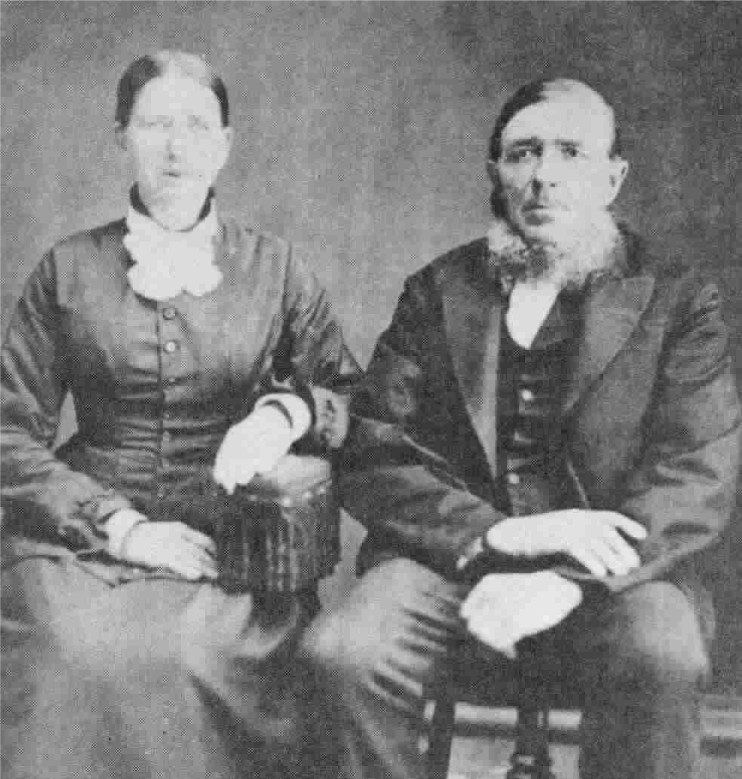
This day had no special meaning for me. Unlike most people my age, I have no children or grandchilden, and I've reached the age when I no longer have living grandparents to honor. Still, a photo from my mother's album reminded me of my maternal grandparents, Edward S. Uhl and Minnie Louise Blanchard Uhl.

This picture shows them early in the 1900's, probably before my mother was born. I never knew Grandpa Uhl. He died the week before my mother's high school graduation, so I know him only though her memories.

I did know Grandma Minnie, as we called her. My first memory of her was as a spirited widow who drove an old Chevy coupe with a rumble seat. As a child, I loved to ride in that rumble seat, wearing a scarf and sunglasses and pretending to be a famous movie star in disguise.

Later, our whole famiy visited her and her third husband on a small farm near tiny Scales Mound, Illinois. The things I remember best about those trips are the kerosene lamps and the outhouse (we'd always had electriciy and indoor plumbing at home in Wisconsin), a shed that suddenly collapsed with a bang one night while we slept, and a mysterious, boarded-up one-room school nearby. My brother and I loved to peer through the cracks to see this fascinating artifact from the past.

For her time, Grandma Minnie was a remarkable woman, a survivor. Despite her lack of economic advantages and education, she always worked hard, and coped with the loss of three husbands and eventually, of her only son, my Uncle Eddie. She did farm work, cooked, baked, cleaned, sold various products door-to-door, read, worked crossword puzzles very successfully in ink, and lived without many of the advantages I've always taken for granted until very late in her life. For her, the walk down the garden path to the outhouse was part of life, even in a time when it was a curiosity to the rest of us.

My father's family looked down on Grandma Minnie and her various husbands as virtually "trailer trash," but my mother and I always admired her spirit. Nothing seemed to get her down; there was no pretense about her. She lived to age 89, finally crocheting colorful flowers for charity at the small town nursing home where she spent her final days. I still have a few of those flowers.

Most of Grandma's grandchildren and great-grandchildren have attended college and achieved success beyond anything Grandma Minnie ever dreamed of. Perhaps those of us who have adopted veneers of sophistication and become accustomed to today's luxuries need grandparents' day to remember those who came before us. Grandma Minnie still lives in my memory to teach me that it's not the material things that count most.

Copyright 2008 by Marlys Marshall Styne

Friday, July 04, 2008

July 4 in Whitewater, Wisconsin, Revisited

Since my Independence Day experiences from childhood seemed to be much the same from year to year, I'm taking the liberty of reprinting my blog post from one year ago. The photo, borrowed from the Whitewater Banner on line, is entitled "Clown Parade," and it's from the 2007 parade in Whitewater, Wisconsin, my old home town.

This year? As I did last year, I'll enjoy the festivals and fireworks of the weekend on TV, happy to avoid the crowds. Those days on Grandma's porch are long gone, but I hope such days still exist for small-town children today. I still remember the excitement!

Here's what I wrote a year ago:

Parade Memories and July 4th at Grandma's

My paternal grandmother lived in town, and that was exciting to me as a child. I grew up on a farm with visions of big-city skylines in my head; Whitewater, Wisconsin, did not qualify, but I considered it a step in the right direction.The excitement there was the 4th of July parade.

As I remember, it began on Main Street and turned down North Franklin street to the city park. Grandma lived on North Franklin Street.I remember the joy of swinging back and forth on Grandma's front porch glider and admiring the passing bands and floats and marchers, feeling patriotic, and always munching on some snacks that my plump body surely didn't need.

As I look back, I realize that it wasn't much of a parade by today's standards. The "floats" began as farm wagons, trucks, cars, and even children's wagons, and the bands sometimes played out of tune. Still, the parade spirit was there. I loved the flags and the excitement.

As I recall, I've participated in only three or four parades during my lifetime. In those days on Grandma's porch, I dreamed of parading as an honored celebrity or Grand Marshal, but of course it never happened. In Whitewater, I wore an ill-fitting purple band uniform, played my clarinet, and marched with our fledgling high school marching band once or twice. Ours was the smaller of the town's two high schools, and as I remember, the larger one had a bigger, better band. I once rode on a farm wagon-based float that proclaimed "Education Reflects the Spirit of Liberty" on the side and featured an old-fashioned mirrored "crystal ball," dance hall style, in the center.

At Luther College, I remember riding on a homecoming parade float in a fancy new yellow gown. It rained that day, and what I remember best is that the dress was ruined by run-off from the blue crepe paper decorating the float. My parents were in the crowd to observe this spectacle. I can't remember either the theme of the float or the sponsoring organization, but it may have been either the drama group or the literary society.

Today, I enjoy parades vicariously on TV. I admire the flowers and the beauty of the Rose Bowl Parade floats, the hype and variety of the New York Macy's Thanksgiving Parade, and the marching politicians, commercialism, and enthusiasm of Chicago's many big parades. Still, no parade quite provides the excitement of being "downtown" on Grandma's small-town front porch, swinging back and forth and eating. That experience was a generator of big dreams.

Copyright 2007 by Marlys Marshall Styne

Sunday, June 15, 2008

Remembering My Father: Clifford W. Marshall, 1905-1974

In my book Reinventing Myself, I described my father as an enigma. He seemed to live in my mother's shadow. Like me, he was quiet and reserved; like me, he apparently suffered from clinical depression for much of his life, or at least that's my unofficial diagnosis or my explanation for his being the way he was.

As I look back, I realize that Clifford William Marshall was a good man, forced to be a farmer during poor economic times while he dreamed of better things. He never "made his mark on the world" in any way that befitted his intelligence and his college degree (in an age when college degrees were rarer).

My father was easy to overlook or ignore, but I realize now that he was a good man who did his best to meet his responsibilites. If he was sometimes reclusive and unpleasant, he probably had reason to be. He was browbeaten by his mother, and to a lesser extent, by his wife, my mother. I don't blame her; she did what she had to do to cope with life.

My father, pictured on the left (above) in about 1933 with my mother and me, had red hair, which I always coveted. Later, he grew bald, and he put on weight because of his unhealthy eating habits: a daily pint of ice cream at bedtime will do that to you. He also developed heart disease and diabetes toward the end of his life, and suffered a major stroke. He died at age 70 when he suddenly fell from the motor scooter he was riding along a snowmobile trail in northern Wisconsin. I missed his funeral; my husband and I were in London at the time, and couldn't get back in time.

My father was a kind man. He befriended an alcoholic acquaintance and tried to help him in an ultimately futile struggle to remain sober. He never drank himself, but he smoked for many years in an age when the dangers of smoking were not as well known as they are today. He took me for a boat ride on a northern Wisconsin lake once; we didn't talk much, but I remember that he was amused at my adult fear of water, my inability to swim, and my insistence on wearing a life jacket.

What else can I say? Here are the last lines of my chapter about him in Reinventing Myself: "Maybe he was even proud of my brother and me. Maybe under his quiet demeanor and his lack of communication, he knew some secret joy. My brother pities him as a victim of a dominating wife and a domineering mother, but I see him now as a victim of clinical depression that was never diagnosed or treated. I wish I'd had a chance to know him better--but perhaps I wasn't paying enough attention."

Copyright 2008 by Marlys Marshall Styne
Photo from the family collection

Sunday, May 11, 2008

A Mother's Day Card

I received a lovely mother's day card yesterday, a beautiful and expensive one. My contemporaries may ask, "What's so special about that?" Most women my age have children, grandchildren, even a few great-grandchildren, and probably receive cards and gifts galore. I am, on the other hand, childless.

This card came from a fifty-something man who is technically my stepson, but whom I've never really known. He is the son of my late husband from a previous marriage, and he was grown before I married his father. His own mother is still alive, and still blames me for the breakup of her marriage many years ago. (No, I wasn't actually a home wrecker).

Anyway, David has always been something of an embarrassment to me. He is a long-time schizophrenic, does not always make sense, and appears homeless and unkempt, although he lives in a group home now. His writing is the ungrammatical scrawl of a child, and I admit having ignored his attempts at friendship and avoided his occasional telephone calls. Today, I began to rethink the whole situation.

There's nothing I can do for David; his own mother, who is in her eighties, is in charge. However, I need to be more compassionate. Thank you for the lovely card, David. I plan to write you a letter soon, and I may even buy you a cup of coffee when and if I see you. You may be helping to melt the hard heart of a lonely old woman who has always hated or ignored mother's day.

Saturday, February 16, 2008

An Update on Motorcycles


Just in case anyone wants to see my brother's new motorcycle (see the second paragraph of my February 10 post), here it is!

Sunday, February 10, 2008

There's Something About Motorcycles . . .

I live in Chicago, and I’m seventy-five years old, and it’s February. So why am I thinking about motorcycles and motorcycling? Perhaps it’s because my brother, who lives in southwestern Utah, is eagerly looking forward to riding, and he recently bought a new motorcycle. Here’s a quote from one of his recent emails:

"The even better news is that the riding season is just around the corner. For the past couple of weeks I have been adding stuff to my new bike. As it always happens in the world of motorcycles, a new bike is a blank canvas unto which one paints one’s own personality in VERY expensive chrome goodies. Bottom line, my bargain-priced bike is turning into less that a great bargain."

Note that enthusiasm. My brother is only two years younger than I am, but motorcycles are a big part of his life. That’s not true of me any more, but strangely enough, it once was. Here is a quote from a self-interview in my eGenerations journal and my other blog, "Write your Life!"

"I guess many may not know that this stodgy old professor has toured the U.S. and Europe on the back of her husband's BMW motorcycles. We traveled through the Alps four times, and our final foreign trip by motorcycle was our fascinating trip to Russia in 1990."

While I’m quoting myself, here’s a sentence from my first book, Reinventing Myself. This is from the chapter "Mountain Memories, 1976," about our first European motorcycle trip, the one during which I fell off and broke a leg. That happened in Austria.

"There’s nothing like motorcycling to make anyone feel almost a part of the mountains." Yes, indeed. That’s how I explained being eager to get back on and take almost the same alpine tour in 1981, and twice more in the 1980's, and then the trip to Russia, with many U.S. and Canadian trips between.

And this is from my late mother’s autobiography, "My First Eighty-Six Years: A Midwestern Life":

"My cousin Roy . . . bought a motorcycle with a sidecar. About once a week, usually on Saturday, he came to Aunt Mary’s for dinner and then took me for a ride. I really enjoyed those rides, which were often two to three hours long . . . Grandma and Aunt Mary didn’t really approve of my motorcycle rides, but accepted them, with instructions to Roy to drive carefully. How ironic that my attitude was about the same as theirs much later, when motorcycling became a part of life for both of my grown children."

So what’s the fascination of motorcycling? I’ve heard parents say, "I’d never let my son (or daughter) ride one of those dangerous things!" Of course parents don’t really have a say after the kids grow up. My husband and I began our trips in our forties. Was I afraid? Yes. I’d read all those stories about motorcycle accidents, but then I’d read plenty about automobile carnage on the roads as well. Besides, I was and am more or less a fatalist. If I had little sense of daring earlier, my late husband helped me to develop one.

My husband’s riding skills improved after that accident in Austria, and I learned how to fall correctly. We always wore helmets. If you analyze motorcycle accident statistics, I think you’ll find that most victims are young and foolhardy. We were neither, although our trips amazed some of our friends. We belonged to a club that included doctors, lawyers, and business people of all types, hardly Hell’s Angel or Outlaw types. We never had another accident, and my husband’s death had nothing to do with motorcycling, although he continued riding until his final illness.

Today, I realize that motorcycling (as a passenger, not a driver; I don’t even drive a car very well) was good for me. It "loosened me up" both physically and mentally, making me more tolerant and flexible and informal, and best of all, more daring and adventurous. The thrill has obviously continued for my brother, and a retired male teaching colleague nearly my age is still an avid motorcyclist. Sometimes I wish I could put on a helmet and a leather jacket and get back on one of those BMW’s; I had to quit riding in 1990 due to arthritis.

Still, I credit the motorcycle experience for making me willing to take a few chances in life. Motorcycling seems to run in my family, and I have some fond motorcycling memories. Old age can be rather dull without at least a little bit of daring; I hope I haven’t lost that hard-to-explain feeling.

Copyright 2008 by Marlys Marshall Styne

Wednesday, January 23, 2008

Happy Birthday, John C. Marshall

I am an old lady. My brother is an old man. As senior citizens, we're not famous enough to be wished Happy Birthday by the major media, or by many other people, in fact. Therefore, I am using this platform to wish my brother, John C. Marshall of Hurricane, Utah, a happy 73rd birthday.

What can I say about my only brother? While we were growing up in Wisconsin, there was the usual sibling rivalry. We attended the same schools. I got better grades, not because I was smarter, but because I was a bookish nerd nearly from birth. I was like our father. He, on the other hand, was like our mother: social and popular. Girls chased him all the time. He was also a bit lazy when it came to academic endeavors, much to our parents' distress. Were we friends? I don't think so. It was more like we just ignored each other.

I have only two clear memories of our growing up at home: we both listened to Chicago Cubs game radio broadcasts (this was before TV), and he taught me how to keep score. I couldn't do it now, but for some reason I was proud to be able to do it then. When his school grades slipped, I remember trying to help him with his writing, but I don't think that worked out very well.

Even though we both attended the same college during two overlapping years, we seldom saw each other there. I majored in English, he in Chemistry. I inhabited the library; he explored the social scene. I was always on the honor role; he wasn't. I graduated near the top of my class; he didn't.

Fast forward to the later years: We both became college professors, in different fields and at different types of colleges. He, once the reluctant scholar, went on to earn a PhD, while I eventually settled for an MA. He married young and became the father of two; I married late and had no children.

We both eventually were divorced, I first, to the chagrin of our parents. I eventually remarried and had a long, happy marriage; he has not remarried, and is not likely to at this point. I retired in the big city of Chicago. He hates cities, and retired to southwestern Utah, within sight of Zion National Park

Through many years, my brother and I did not keep in touch, although I did visit on the occasion of his daughter's birth and once or twice later. Strangely enough, we eventually began to share a few interests and activities, and a few similarities began to emerge.

We both learned to love motorcycle touring. I'll admit that my second husband was the impetus for me, while John had been a mortocyclist for years. We both learned to love computers, he in a much more technical sense than I, but he became my personal computer consultant. At one time, we competed for the latest, biggest, best computer. He "sold" me on the benefits of color laser printers, although the ones he buys are far too big to fit into my condo. I do enjoy one of the smaller ones, though. I now ask his advice on electronic matters.

After my husband died, my brother invited me to spend Christmas in Utah. I was surprised and elated. His family was busy elsewhere, and I was alone. It worked out amazingly well; he got me "out of my shell" a bit. We just sat around and read a lot during the holidays, but we always had a few gifts from his family, and I began to feel more connected. I helped him by proofreading the first of his annual family calendars, which have become a tradition.

When I decided to write my first book, my memoirs, John was there to offer his comments via the Internet. I gradually sent him all the chapters, and he made some valuable suggestions. He suggested a friend of his to proofread, and her help was wonderful!

After several years of Christmas in Utah, we began to visit John's daughter and her family in Texas for the holidays, again at his urging. I now look forward to the season I once dreaded.

My brother and I still disagree on a few things, but somehow, as we age, we get more alike: determined, cerebral, and as active as age permits. He still enjoys motorcycling, exploring the Western countryside, while I enjoye non-motorcycle travel all over the world. We disagree somewhat on our parents' natures and influences, but he joined me by contributing to the family tribute to our mother. And yes, he can write very well now.

My advice to everyone, old or young, is to appreciate your siblings. If they are not quite like you, that's o.k. You may become true friends much later in life, and he/she may turn out much better than you predicted!

So Happy Birthday, John. Have many more!

Your sister, Marlys

Copyright 2008 by Marlys Marshall Styne

Wednesday, December 19, 2007

Christmas in Texas

Tomorrow I'll be off to Houston, Texas, for Christmas with my niece and her family: Cindy and Scott Truby and their daughter, my grand-niece Lauren. My brother John, Cindy's father, will be there from Utah as well. I'm looking forward to the trip.

As you can see from the 2006 photo below, their family room is an inviting place. I look forward to sitting in one of the recliners, with the pool glistening outside (although it will probably be too cold to bask by the pool much) and the fireplace to provide extra warmth on cool early mornings.

The stockings will be filled on Christmas morning (no, I don't believe in Santa Claus, but I believe in my family) with little "fun" gifts, and I'll enjoy the ritual of opening gifts on Christmas morning.

The "big" gifts are artfully arranged under the Christmas tree in the living room (see above), beautifully wrapped by my niece, who loves to do such things. There will be a lot of wonderful gifts for Lauren, as there should be. I look forward to hearing about her first term at the University of Arizona. She's smart and talented, and I assume she'll have great stories to tell. As a non-shopper who doesn't need anything, I don't expect to give or receive many gifts myself, but I always enjoy seeing the joy of others, especially the younger set. I ordered and sent my modest gifts earlier.

My niece loves to cook, too, so I anticipate overeating and the need to go on a very strict diet once I return home. It's unusual for me to be surrounded by food, but I must say I enjoy it, whatever it's dire effects on my waistline.

For me, Christmas isn't about gifts, decorations, or rushing around. It's about the one time of year I'm likely to be among family for a few days. Loner though I am, I have to admit that Christmas is a highlight of my year. Thanks, Cindy, Scott. and Lauren. Just your inviting me is gift enough!

Will I miss the traditional snowy landscape I'm used to in the midwest? Perhaps a little bit, but it will be a relief not to worry about slipping and falling on icy sidewalks. There will be time enough for that once I return.


Merry Christmas to all. I may send my greetings from Houston, and I promise I'll be back to "serious" blogging about December 27, in time to wish you all a Happy New Year. What would I do without my online family?

I do live a great deal of my life on line, but this is the time to appreciate the real thing. Thanks, Cindy, Scott, and Lauren--and my brother John. I also extend my greetings to my Minnesota family, my nephew John D. and grand-nieces Nicole and Stephanie, and to my more distant relatives scattered about the country.

Photos by the author (2006).

Sunday, December 16, 2007

Seniorwiter's Top Ten List for 2007: Good News / Bad News on Aging, Travel, Writing, and Family


Photo:


No, that's not me. It's my late mother, Violet Uhl Marshall Funston, celebrating her 93rd birthday in 2004 (with her grandson, my nephew, John D. Marshall). See #1 below.

Will I be lucky enough to live that long and still look so good?


10. I turned 75. I’m glad to be alive, but I could do without the wrinkles, aches, and pains.

9. Walking on ice became impossible (two falls last winter), so I considered giving up my one-morning-a-week volunteer job. The long walk and rush hour bus ride are just too much in the winter, and it’s hard to find an available taxi here before nine a.m. However, I discovered that I can leave my heated garage, drive to the Grant Park North garage, and walk underground to the Cultural Center without venturing outside. The cost, $22, is a bit steep to get to a volunteer job, but I can probably afford it, at least until spring.

8. My future luxury high rise lifetime care residence, The Clare at Water Tower, extends at least 40 stories (out of 53) into the sky now, and it looks beautiful. Thoughts of my final move and living among "old people" (like me) still bother me a bit.

7. I traveled to Ireland for the first time. It’s a beautiful country, but to get to and from there required a long plane trip in economy class and going through London’s non-senior-friendly Heathrow Airport. My arthritic knees gave out in a big way.

6. I decided to give up overseas travel, but within months I was planning a business class trip to South Africa for 2008. Am I crazy, or what?

5. I took a creative writing class with some wonderful young people. I enjoyed the class. Two of my short stories will soon be available as Amazon Shorts, and two others have appeared in The Elders Tribune on line. My stories are about elderly people, and they’ll never be widely popular. That’s all right. My regular Writing column on eGenerations is gradually attracting more readers, as are my two blogs.

4. I published my second book, Seniorwriting: A Brief Guide for Seniors Who Want to Write. Due to poor communication between Infinity Publishing and Amazon.com, it appeared to be unavailable for months, although it really has been out since early October. I’ve been told that all is well now.

3. Seniorwriting received good reviews and interviews, but of course the mainstream media and bookstores aren’t interested. My first book, Reinventing Myself, and my first blog, "Never too Late!" both won awards from the Illinois Woman’s Press Association and the National Federation of Press Women in 2007.

2. I had one short story and one essay accepted by different anthologies planned for 2007. One anthology was cancelled for lack of interest, and the other, due out on December 1, is in limbo. Oh well.

1. My mother, Violet Uhl Marshall Funston, died at age 95 in Minnesota. We weren’t especially close, but she remained an active, adventurous, friendly woman into her nineties. She will be missed, but in a way, it was good that her final pain and suffering ended. Her death brought contacts with relatives and friends I hadn’t seen or heard from in years, and I was able to edit a family-and-friends tribute to her, Remembering Violet.

So that's my strange and personal Top Ten list for 2007. To sum up the year, I can only say that nothing’s perfect, but life goes on, and there’s more good than bad. How about writing your own top ten list?

Copyright 2007 by Marlys Marshall Styne

Tuesday, April 03, 2007

My Mother Died Today

I sadly report that my mother, Violet Marshall Funston, age 95, passed away this morning in Northfield, Minnesota. If you have read my March 9 post, you know that she was a remarkable woman for her time and place, and seeing her suffering in her later years has been painful for everyone who knew her--and she had a lot of friends.

I regret that Mother and I were not especially close. I fulfilled one of her dreams by having a long, successful teaching career and achieving financial independence, but I did not live up to her ideal of the perfect housekeeper and cook, wife, mother, and grandmother. I think that rather late in life, she learned to accept me as I am. She did not retain her reading ability long enough to read my book, or probably to recognize that it existed, but I think she would have been proud.

Our relationship was problematic, as mother-daughter relationships often are, but we loved each other. She awakened my imagination, believed in college education for her children even when she had to take a job to finance it, and borrowed money to make my first European trip happen. Ever the self-sacrificing mother, she traveled abroad only once, much later, when she went to England with me. We both enjoyed the trip very much.

I will remember my mother not as the very ill nursing home patient she eventually became, but as the smart, attractive, enthusiastic, friendly person she once was. Goodbye, Mother.

(Note: I shall be driving to Minnesota for a few days, so there will be no new posts here for a while. I'll be back.)

Copyright 2007 by Marlys Marshall Styne
Photo: Mother on her 94th birthday, with my brother John and me

Friday, March 09, 2007

My Mother's Memoir

I spend a lot of time urging seniors to write the stories of their lives. I wrote and published mine in 2006. But where did I get the idea? It long ago occurred to me that my mother's unpublished life story, My First Eighty-Six Years: a Midwestern Life, which I edited and had printed for her in 1997, was my main inspiration. She distributed her life story to family and friends and to anyone who expressed the slightest interest; she was still giving copies to the staff at her nursing home a year or two ago, when she was able to communicate (she still clings to life at 95, but just barely). She has had an interesting life, and of course she was one of those people urged to write. I'm glad she did.

The picture above shows my mother, Violet Marshall Funston, with my brother and me, at her 90th birthday party in 2001. All three of us have changed since then, but my brother (now 72) and I are still active and relatively healthy.

Here are the first five paragraphs of My First Eighty-Six Years. I hope they will encourage other seniors to write their own life stories.

"There was a time when heredity was blamed for whatever was wrong with you. When I was old enough to spell and understand the word 'heredity,' I could only hope that the good, solid, God-fearing Methodists who were my mother's parents would somehow be the stronger influence on my character. As I grew older and wiser, I realized that I was much more like my father's family, and was thankful. They had lots of self-confidence, no fear of giving up a sure thing to try something new. My father taught me I could do anything I wanted to do, and that I should never be afraid to follow my dreams.

"As a child, I spent much time with my father's family and as little time as possible visiting my mother's parents. There was always something happening at my father's home. My father's mother, Harriet Bryant Uhl, was English, and being English, never missed her afternoon tea and cakes. Whenever possible, I joined her. She was short and wide and jolly and could always cure any ache I might have, real or imaginary, by holding me on her ample lap. Then she told me stories of her early married life in Pennsylvania where her eleven children were born, eight boys and three girls, without benefit of a doctor. According to Grandma, child-bearing was a natural process, and a healthy woman should be able to assume her full work load two or three days after childbirth. She didn't think much of the women who used childbirth as an excuse to get a week's vacation.

"One of my favorite stories that I asked Grandma to tell over and over again was about my father. My father had a slight limp, and I never tired of hearing Grandma tell how he got the limp. When he was a small boy, he accompanied Grandma to the woods near Johnstown, Pennsylvania, to pick blackberries. He had his own little bucket and picked and ate blackberries. One day, he became tired and sat down under a tree. A copperhead snake crawled into his lap. It frightened him, he hit at it, and the snake bit him in the ankle. Many miles from a doctor, Grandma sucked the poison out and saved his life. He was sick for many months. He would have been in third grade, but he never attended school after that. His mother taught him. She not only taught him reading, writing, and arithmetic, but in the process taught him religion, kindness, and good work ethics. His greatest wish was that both of his children, my brother and I, get good educations, and we did, in spite of some obstacles.

"According to my Aunt Mary, Grandpa Joseph Uhl taught rural school in Pennsylvania when the eleven children were small, and sat evening after evening at the neighbors' home talking, singing, and playing the violin. Grandma did the work on the farm, including milking, raising pigs, raising chickens, and gardening. She got the help of a neighbor when it was necessary to take a few days off to have her babies. She taught the children to help when they were small. To Grandma, farm work could not be done by an educated person such as Grandpa, especially one who played the violin. I never knew a happier person than Grandma, and she raised a happy, well-adjusted family. Ten of her children were God-fearing Catholics who married well and earned their share of this world's goods. Unfortunately, one son was an alcoholic. His wife divorced him and took the two children, and he came home to live with Grandma and Grandpa. Grandma never got over her one failure in raising a child, always blaming herself. Many a time I heard her ask, 'Where did I fail with George?'

"As I grew older and listened to the champions of women's liberation, I thought of Grandma, always strong, always happy, meeting all her problems head-on. Thinking of Grandma gave me courage. It is always nice to have someone to help you, but if there is no one available, you can do it yourself."

While I can't endorse the "woman as martyr" view expressed here, nor have I ever shared it, I am happy to belong to a line of strong women. Most of all, I am happy to have had a mother who loved to read and write and encouraged me to do the same.

Copyright 1997 by Violet Marshall Funston and 2007 by Marlys Marshall Styne
Photo from John C. Marshall's family collection.

Friday, December 29, 2006

Christmas: it's the Little Things That Count

As I looked through this week's Christmas photos of the tree and beautifully wrapped gifts, fireplace stockings bulging with gifts from Santa, and the gift-opening ritual, I realized that no matter how many electronic marvels anyone received (and I saw many of them), it's the small, colorful things that got my attention.

The feet above, embellished by rolled-up pajamas, new Christmas socks, and new sneakers, belong to my grand-niece, Lauren Truby, high school senior and dancer (that explains the pose) who plans to attend the University of Arizona's School of Dance next fall. This photo was taken on Christmas morning in Houston, Texas, where I spent the Christmas holiday. Send me a more glamorous shot, Lauren, and I promise to post it here too.

Lauren's parents, Cindy and Scott Truby, entertained me and my brother royally during our visit. I hadn't eaten so much great food since last year's visit! The amount of baking and cooking that went on for only five people amazed me, non-cook that I am. I'm of no use in the kitchen, as my niece has long known. I sat and watched and enjoyed the good smells, not to mention the food. My mother's old recipes for sour cream raisin pie, copper penny salad, and turkey stuffing were featured. I have to confess that I don't remember these dishes from my childhood (I've always had a love-hate relationship with food, and I don't remember Mother as an especially good cook), but my brother and his daughter (Cindy) remember it all fondly. I guess my appreciation for family tradition began very recently.

My gifts were fine and greatly appreciated (the Godiva chocolates had the shortest life span), but Christmas is for the young. Lauren was very pleased with the many things she got for college: size 0 clothing (I never knew there was such a size), tea maker, electronic gadgets, jewelry, and of course, the socks and shoes. While I was in Houston, I received an e-mail from another high school senior grand-niece, this one in Minnesota, who wrote about her plans to become a registered nurse. My third and oldest grand-niece, whom I haven't heard from as yet, wants to become a figure skater.

Christmas can be depressing for the old and lonely, but, widowed and childless as I am, I am very grateful to have a few young relatives. They are smart and attractive, and they represent the future. They may never become rich or famous (or perhaps they will), but they represent life. They will dance and skate and help other people and change society. That's why I'll remember those colorful socks and shoes.

Copyright 2006 by Marlys Marshall Styne.
Photo by John C. Marshall

Wednesday, December 20, 2006

Picture of the Year: Senior Toys


This is the cover photo from my brother's 2007 calendar. Here is what he has to say about it:

"This year's cover declares that 'retirement is all about toys.' While that may be a bit of an overstatement, there is a very substantial part of that statement that is true.

"My three favorite toys, pictured from left to right are: (1) 2001 BMW Z3.0i, next to the last year of the 'classic' Z3's. The Z3 was introduced to the world as James Bond's ride in the movie Goldeneye; (2) 2001 Honda GL-1800 (Goldwing), which is probably my favorite toy. It now has 128,000 miles on it and it is still going strong; (3) 2005 Honda VTX-1800, a V-twin with awesome torque that is a blast to ride. This is not a long-distance ride, but a 'bar hopper,' if one is interested in that sort of thing."

My brother is John Marshall, of Hurricane, Utah; he will be seventy-two in January, and he retired from a long career as a chemistry professor in the 1990's. I admire him for "doing his thing" and living where he wants to live, just as I do. Perhaps it runs in the family!

Copyright 2006 by Marlys Marshall Styne
Photo by John C. Marshall

Thursday, November 30, 2006

The Fascination of Genealogy: the Bryant Connection

Here are my maternal grandparents, Edward Samuel Uhl, 1869-1928 (son of Joseph Alexander Uhl and Harriett Bryant Uhl) and Minnie Louise Blanchard Uhl, 1889-1978 (daughter of William Blanchard and Sarah Ludy Blanchard).


Once I discovered the family history of my German great-great grandfather John Adam Haag, I was hooked. I constructed a family tree on Ancestry.com, and I began to wonder about my other ancestors.

According to one fascinating family legend, my maternal great-grandmother Harriett Bryant Uhl was a descendent of a brother of American poet William Cullen Bryant. I never saw any proof of that, but it was a legend of great interest to my mother and me, both students of English and American literature.

If this legend were true, it would mean that my ancestry could be traced back to the Mayflower: Plymouth Colony residents Stephen Bryant and Abigail Shaw and John Alden and Priscilla Mullins, the latter couple immortalized by Longfellow. Can I prove this? No. Would it make any difference in my life if I could? No. However, I find all of this fascinating!

There are obvious problems. First, according to my Internet research, William Cullen Bryant had four brothers, Austin, Cyrus, Peter (aka Arthur), and John Howard. (He also had two sisters, Sarah Snell and Louisa Charity.) If one of the brothers was an ancestor of mine, which one?

Then, while the Bryant family, minus William Cullen, who remained in the East, and the father of the family, Dr. Peter Bryant, who died in 1820, did move west to Princeton, Illinois, in the 1830's, Harriett Bryant Uhl was born in Pennsylvania and later moved to Iowa with her husband and children. Did Austin, Cyrus, Arthur, or John Howard Bryant or any of their descendents ever live in Pennsaylvania? If not, there goes the story.

Who were Harriett Bryant Uhl's parents and grandparents? Will I ever find out? Stay tuned.

Copyright 2006 by Marlys Marshall Styne

Wednesday, November 15, 2006

Tracing My Ancestors: Great-Great Grandfather John Adam Haag (with his second wife, Anna Margaretha Haag), 1883


I've often admired people who could trace their families back to the "old country," wherever that country was. I always said that I couldn't trace mine because of my mixed heritage (English, French, German) and the relatively early times all of my ancestors entered the United States. None of the relatives I knew spoke of any ties to any "old country," or if they did, I ignored them. I just wasn't interested.

Recently, on the occasion of cleaning out my messy home office for new carpet installation, I discovered a yellowed document entitled "Historical Sketch and Genealogy of the John Adam Haag Family," prepared by H. Arthur Haag and dated October, 1949. In 1949, I was a high school senior, and probably not very interested in my roots. I didn't recognize the name Haag or bother to find out what this document was about. I apparently just put it into the miscellaneous collection of things I moved around with me, even on my last move from my house. I thought I'd done a good job of "decluttering" then, but you'd be surprised at how much remains. This time, curiosity prevailed, and I decided to read about the Haag family. What I discovered was, indeed, interesting, now that I'm old enough to appreciate it.

John Adam Haag was born in Wildenthierback, Oberamt Gerabron, Kingdom of Wurttemberg, Germany, on September 29, 1819. He lived there until 1845, when, "unwilling to continue longer enduring oppression and tyranny" at home, he and a cousin emigrated to the growing village of Milwaukee, Wisconsin, to find freedom. He worked as a cabinet maker and studied English at night. Later John was joined by his parents and other family members, and the entire family soon moved forty miles west to Helenville in what is now Jefferson County. There was not even a road to Helenville, but the entire family walked on a blazed trail through a dense forest, a two-day journey. They assembled a fairly large portion of farm land near Helenville.

John Adam soon married Barbarn Gunz, and all of the Haag relatives built log cabins on their properties. They hunted squirrels and prairie chickens, raised vegetables, collected sap and made maple sugar and syrup. They raised grain and grew fruit trees. John Adam also made wagon tongues from the white ash trees on his farm and hauled them forty miles west to Madison to sell. As a cabinet maker, he was called upon to make caskets for the pioneer community, priced at $10.00 each. John and his sons cut cordwood to haul to Whitewater (my old home town) by sled and sell. Oxen were used as draft animals, horses being scarce there until the 1860's.

Barbara Gunz Haag died in childbirth in 1856, and a about a year later, John married Anna Margaretha Haag (not related). By 1868, the Haags had eleven children, and John Adam needed more room so that his grown sons could live nearby. The land around Helenville was all taken, and the liquor was flowing a bit too freely. John Adam Haag was not a teetotaler, but the staunch Lutheran worried about the moral climate. The whole family set out for the new frontier across the Mississippi, the fertile black prairie land of northeastern Iowa. They settled in Sumner, Iowa, where John Adam continued his farming activities and managed a cane mill, then very important for processing the sorghum or cane used to manufacture the molasses often used on bread and pancakes. He died at age eighty-eight in 1907.

The John Adam Haag clan featured large families and long-lived descendants. Here is where I come in: My great-grandmother was John's daughter, Maria Margaretha Haag Hoffman (1847-1930). My paternal grandmother was Maria's daughter, Rosetta Hoffman Marshall (1881-1957). My father was Rosetta's son, Clifford William Marshall (1905-1974). Maria Margaretha and her husband George Hoffman did not make the move to Sumner, Iowa, with her parents, so my family tree continued to grow in Wisconsin, never far from the old Haag homestead in Helenville.

Since I was born in 1932, I never knew the first or second generations traced by H. (Hugo) Arthur Haag in 1949, The author (b. 1883) was a nephew of my great-grandmother, the son of one of her older brothers, George Jacob Haag (1851-1936), so he was a cousin of my Grandmother, Rosetta Hoffman Marshall. I never knew H. Arthur Haag, and I'm sure he's deceased by now. However, I salute him for his efforts to trace this very large family, and I'm sorry I didn't know him when I was young.

Genealogy is an interesting science. Most of us hope to find famous people, royalty, heroes, or captains of industry in our backgrounds, and I've always thought that my English and French ancestors, little though I know about them, were more lively, talented, interesting people than the "stodgy" Germans. But to quote H. Arthur Haag, John Adam was "honest, sober, industrious and God-fearing . . . loved by his family and respected by his neighbors, " with the qualities of courage, leadership and initiative. "The Haags are plain, simple, honest people, not uppish or pretentious; well enough off in a material sense to be capable of taking care of themselves without following mean occupations, and poor enough to show that they are not grabbing everything in sight." Thanks, H. Arthur. Those are good qualities I'm happy to share.

Copyright 2006 by Marlys Marshall Styne

Saturday, November 04, 2006

Memories of the Past: Whitewater, Wisconsin


The first photograph shows me (on the left) with school friends Joan and Virginia sometime between 1947 and 1950. We are standing in front of the old log cabin that was moved to the campus of what was then the Whitewater Normal School, Whitewater, Wisconsin, in 1907. The log cabin still stood behind the main building many years later, during my years at the college "training school" and College High School. When we were young, the cabin served as a lesson in pioneer life for us.

I was reminded of the old log cabin when I read Fred G. Kraege's book Whitewater (photo on the right), published earlier this year as part of the "Images of America" series by Arcadia Publishing. The main college building burned a few years after my high school graduation, and the college, now the University of Wisconsin at Whitewater, is much different these days. The training school and College High are long gone, and I assume that the log cabin is too. Still, Kraege's book transported me back to my school days and my life in my home town from 1932 to 1950. See the August archives of this blog for an account of my most recent visit to Whitewater.

The author did an excellent job of collecting historical photos dating before, during, and beyond my years in Whitewater. He documents many of the changes I have observed in recent visits. I was happy to see a photo of the old City Hall, which I always found dark and mysterious, as well as ornate and romantic. The Whitewater skyline is much different without it. There's a picture of the old City High School, which we rather snobbishly referred to as "the other high school." In reality, of course, this was the town's main high school, while College High always remained small. Our school was not really elite, but we sometimes liked to think it was.

Churches and cemeteries are also featured in the book. First English Lutheran Church, which I attended for years, is described as a "prominent landmark today." I have either forgotten, or never knew, the church's history as first the Baptist Church and then the Norwegian American Lutheran Church. It was already First English Lutheran Church when I lived in Whitewater; the name refers to the language used, not the nationality of its parishioners.

While I could not find any references to my family in the book, I recognized enough streets and buildings to feel nostalgic. My grandfather, W. G. Marshall, owned a livestock farm on the outskirts of town (in an area once called Cold Spring, in Jefferson County) that my father, Clifford W. Marshall, later operated as a dairy farm. My paternal grandmother, Rosetta Hoffman Marshall, retired from the farm to a house on North Franklin Street just north of Main Street in Whitewater, a house that still exists. My mother, Violet Uhl Marshall, managed the Sears, Roebuck and Company Order Office on Main Street for sixteen years, during my high school and college years and later. She had begun college at Whitewater State Teachers College before I was born, and she finally graduated from what had become the University of Wisconsin at Whitewater in 1967, long after I had moved on.

I was eager to leave Whitewater, and I have had no close relatives living there for many years. Still, I have learned to appreciate my home town's history and beauty and the spirit of its early settlers. I'm glad I found this book!

Copyright 2006 by Marlys Marshall Styne