Showing posts with label Book Reviews. Show all posts

Sunday, January 31, 2010

A Different Look at Alzheimer's: A Book Review

A review of Still Alice, by Lisa Genova (Pocket Books, 2009).

This is not a book to read for amusement or quick entertainment. It iis a short and provocative read for anyone seriously wondering about the ravages of Alzheimer's
Disease, or anyone faced by the disease among family or friends. It's a disease that nobody wants to get, but one that seems to be getting more prevalent.

In her first novel, Lisa Genova, neurologist and Alzheimer's advocate, creates an early-onset victim of the disease, Harvard professor Alice Howland, who gradually sees her world crumbling. A world-renowned experst in linguistics with a successful professor husband and three grown children, Alice lives a very active life of research, teaching, and speaking at conferences all over the world. She is also a runner.

Imagine the horror when this active woman can't find her way home from a run in her neighborhood, forgets the ingredients in a favorite recipe, and generally finds her life crumbling around her. She seeks extensive medical opinions and has many tests, but despite her husband's doubts, the outcome is the dreaded one: at age 50, she has early stage Alzheimer's.

Through extensive research, Genova has managed to create a seemingly realistic picture of what it must be like for an intelligent, successful person to notice her mind and memory crumbling. Alice tries various drugs, but to little avail. She worries about having to give up her teaching job, and eventually, she must.

Her family relationships change considerably, leading to greater understanding and patience, although her husband feels compeled to take a new job in New York. Early on, she starts a support group for others also suffering the disease, so she still feels she's making a difference in the world. One of her final public acts is giving a speech before the Dementia Care Conference.

With the help of her son, her daughters, and a devoted care giver, Alice survives in her own way.
This book probably takes us as directly as possible into the life of an Alzheimer's patient through the eyes of Lisa Genova, who has done her research carefully. It is a fascinating, if frightening, book.

Sunday, May 17, 2009

Honors and Awards--Again!

Spring seems to be honors and awards time for many organizaations, associations, and volunteer groups. At least four of us here at The Clare have received awards this spring, and there may be more.

This year, I was again surprised and honored to receive awards in the Illinois Woman's Press Association's Mate E. Palmer Communications Contest. Multiple awards were presented at a luncheon yesterday at the Union League Club. I had been notified that I was a winner, but I was expecting not much more than honorable mention this year; I did less writing than usual in 2008.

I was pleasantly surprised to receive two firsts and one second on my three entrees. Lightening struck a third time when my third book, Elder Expectations: My Life in Rictameters won first in the "Creative Verse: Book or Chapbook of Poetry" category. The other two won firsts in other categories in 2007 and 2008. So now I'm not only a writer; I'm a poet! Now if the literary world would only take note. This book has sold even less well than Reinventing Myself and Seniorwriting. I know of only one person outside my family who has read all three of my books: The Clare's Dining Room Manager. Thanks, Carl. I'm glad I donated a copy of each book to The Clare Library.

Here are the anonymous judge's comments:

"Poet Styne ably summarizes the strengths and joys of her work in the final poem of the tome. Lovely!" (I'm not sure that a 50-some page book qualifies as a tome, but then I am a woman of few words.)

Of course you're not likely to have read or remembered that final poem, so here it is:


My Rictameters

Great art?
No, not these poems
Of mine, and yet if they
Just make you ponder, wonder, think
Or dream, consider your own life or write
A story, draw or paint the truth,
Learn who or what you are,
These poems inspire
Great art.


My other first place award was for "In Defense of Self-Publishing"--Parts I & II" published in my other blog, "Write Your Life!" The category was "Writing for the Web: For Hobby or Special Interest Sites."

The comments on this:

"The author uses the platform well to successfully create an easy-to-read explanation of self-publishing. With clear and focused writing the author put forth good effort in content styling for emphasis, scannability for reading and linking to provide context and additional resources. Excellent potential for more interacftivity through chats or issue focused discussions boards."

You can find these entries here:

http://seniormemoirs.blogspot.com/2008/08/priorities-choices-and-opportunities-in.html
http://seniormemoirs.blogspot.com/2008/08/matter-of-choices-in-defense-of-self.html

Finally, my second place award was for two book reviews here on "Never too Late!": "Aging, Life, and Death: A Book Review" (on Where River Turns to Sky, by Gregg Kleiner (Avon 1996; Perennial paperback 2002) and "Realities of Alzheimer's: A Book Review" (on Measure of the Heart: a Father's Alzheimer's, a Daughter's Return, by Mary Ellen Geist (Springboard 2008). Find these reviews by clicking on the "Book Reviews" label toward the bottom of the sidebar. The category was "Writing for the Web: Commentary (reviews)."

These may be small-time awards, but they make me feel good. Never underestimate the power of honors and awards to make people--especially elders--feel appreciated.

Copyright 2009 by Marlys Marshall Styne


Friday, February 20, 2009

The Final Journey: A Book Review

A review of The Leisure Seeker, by Michael Zadoorian (William Morrow, 2009).

The final stages of life often involve hospitals and pain and invasive treatments as even the most productive, happy life comes to a close. What if a long-married couple decided to avoid all that to take a final cross-country honeymoon trip? That's the premise of Michael Zadoorian's novel "The Leisure Seeker."

Ella, with terminal cancer, and John, with Alzheimer's, leave their disapproving doctors and their adult children behind in the midwest to escape in their '78 Leisure Seeker RV along what's left of old Route 66 to Disneyland. With John at the wheel and Ella as navigator, the couple set out to grab just a bit more of life "in search of a past they're having a damned hard time remembering."

This bittersweet tale is about courage and daring, about crumbling roads and memories. There's humor in Ella's matter-of-fact ways of handling John's dementia, in her attitude toward taking her ever-more-necessary "discomfort pills," in her wry acceptance of what's to come.

This is a compelling book. Perhaps it will make some of today's active seniors consider such a final fling. The book's admirable, courageous characters encourage thoughts about daring new ways to approach the inevitable end and to have fun along the way.

Sunday, January 18, 2009

A Cat, a Town, A Life: a Book Review

A review of Dewey: the Small Town Library Cat Who Touched the World, by Vicki Myron, with Bret Witter (Grand Central, 2008).

If you love cats, the book jacket photo alone will entice you. However, this book is about more than just a cat. Dewey the cat is a "catalyst" (pun intended) for the survival of a small Iowa town and a major force in the life of the author.

Dewey (full name: Dewey Readmore Books), only a few weeks old, was stuffed into the book return slot at the Spencer, Iowa, Public Library on a very cold night. The frostbitten kitten was discovered the next morning by library director Vicki Myron, a single mother and survivor herself. From then on, Dewey resided in and ruled the library.

Dewey was a special cat who seemed to know how to charm and comfort everyone, from young library patrons to the entire staff to the local press and especially Vicki, who became his champion and chief companion.

Library patronage increased as Dewey became everyone's special friend. He attracted national and international press attention, even a movie crew from Japan. For nineteen years, Dewey was the symbol of a reviving and surviving library and town. He put Spencer, Iowa, on the map and improved Vicki's problem-filled life considerably. How? Just by being Dewey.

As a cat lover and former small twon girl, I couldn't put this book down. Of course I cried at the end, as I have at the end of every one of my own cats' lifespans, but I'm happy to have met Dewey through this book's pages. He was, indeed, special.

Copyright 2009 by Marlys Marshall Styne
Photo courtesy of Amazon.com

Saturday, January 03, 2009

Hospital Survival Guide: A Book Review


A review of Critical Conditions: the Essential Hospital Guide to Get Your Loved One Out Alive, by Martine Ehrenclou, M.A. (Lemon Grove, 2008).

No one likes to think about being hospitalized, or of dealing with the hospitalizaation of loved ones. This is a book that answers those questions that you probably were afraid to ask or never thought to ask.

Based on interviews with nurses, doctors, social workers, and families, this is a serious book well worth reading for anyone facing the need to deal with any personal or family hospital experience.

According to Ehrenclou, "Hospitals today are institutions struggling to survive in an environment where authority is in the hands of insurance companies rather than patients and their families. Rapid advancement in technology makes ever more expensive treatments in wide demand. Nurses are more expensive and harder to find and retain. . . . Serious infections, which are often treated in hospitals, are inadvertently spread from one patient to another. All of these factors are serious impediments to the compassionate care and good outcome we all desire when hospitalization is necessary."

Every patient needs an advocate or an advocate team, especially if he or she is elderly and impaired. The advocate serves as his or her "loved one's eyes and ears," establishing contacts with doctors and nurses. Responsibilities include keeping track of the patient's medications, allergies, symptoms, treatment plan, diet, and a myriad of other things.

It is the advocate's duty to catch patient name errors (to prevent similarly-named patients from getting someone else's treatment or medications), insist on pain management, and speak up if something appears wrong.

Of course the problem is doing all these things without insulting or seeming to second-guess the doctors, nurses, and hospital administrators. Infinite tact and understanding are required. Yet hospital personnel do want to avoid unfortunate or even fatal errors, and many are willing to listen.

This is a very detailed book, containing interviews, tragic examples, hospital staff and medical terms glossaries, and spaces for patient advocates' lists and notes. It also includes a list of useful websites for information on medical conditions, medication errors, and hospitals.

It would be comforting to think of hospitals as efficient, caring institutions that can take care of us and our families, but the economic realities and unfortunate errors pointed out by Martine Ehrenclou ring true.

Read this book if you or a family member faces hospitalization. It is filled with valuable information and useful suggestions that we can't afford to ignore.

Copyright 2009 by Marlys Marshall Styne
Photo of book from Amazon.com. Go to that site for a look inside the book.

Sunday, September 14, 2008

Realities of Alzheimer's: A Book Review

A review of Measure of the Heart: a Father's Alzheimer's, a Daughter's Return, by Mary Ellen Geist (Springboard 2008).

As lifespans lengthen, it's an unfortunate reality that more and more of us are likely to encounter the tragedy of Alzheimer's Disease. In Measure of the Heart, ambitious, successful California and New York radio news anchor and reporter Mary Ellen Geist tells of leaving her career to help her mother care for her father as he declines in the clutches of this terrible affliction.

Both an exlanation of Alzheimers and a personal caregiver's memoir, this book explores the tragic effects of the disease on the vctim and his family. As the disease progresses, the author learns to let herself be guided by her heart rather than by the pressures of her demanding career.

This very personal story helps to explain the devotion of Woody Geist's wife, daughters, and other family members to this nice, kind, cheerful former CEO who loves to play tennis and to sing, activities he is able to continue long after the disease strikes. The family's selfless devotion and refusal to put Woody into a care facility seem puzzling as the disease progresses, and yet their extraordinary love is admirable.

In addition to telling the victim's and caregivers' stories, this book explores and lists various resources: helpful organizations, publications, and web sites devoted to Alzheimer's and those dealing with it. The book makes fascinating reading for anyone who has ever wondered about the disease or marveled at the dedication of those dealing with its victims. For anyone faced with an Alzheimer's diagnosis in the famiy, it should be required reading.

Copyright 2008 by Marlys Marshall Styne

Monday, September 01, 2008

High Life in Florida: A Book Review

A Review of Leisure Daze, by Mike Mihalek (Heartland 2008)

Mke Mihalek's short, humorous novel Leisure Daze is set in an upscale retirement community in Florida, with a strong cast of characters including a conservative retired general who is president of the home owners' association and a liberal retired lawyer trying to unite the residents in a lawsuit to clean up a polluted south Florida river.

The story begins with two residents' innocent discovery of a large quantity of marijuana and the hilarious ways it affects the community. The pot finds its way into brownies and other baked goods and leads to a lot of happily bizarre behavior. Then the real problem arises: a Columbian cocaine ring that has been operating on the premises for some time senses competition and goes after the unsuspecting seniors.

In a series of strange confrontations, the suddenly more active and newly-armed residents finally win the struggle in their own way.

This book, by a 57-year-old former healthcare worker, should appeal to the author's contemporaries as well as others older and younger, especialy those who fondly remember their rebellious, pot-smoking earlier years. I'm glad that Mihalek dared to portray active seniors, with their peculiarities and foibles. Most of the characters in Leisure Daze somehow manage to be humorous and admirable at the same time. Their different views and personalities illustrate again that older people are not all alike.

Copyright 2008 by Marlys Marshall Styne

Wednesday, August 27, 2008

Aging, Life, and Death: A Book Review

A review of Where River Turns to Sky, by Gregg Kleiner (Avon 1996; Perennial paperback 2002).

This novel about aging, life, and death is strangely compelling, a book I could hardly bear to put down when other matters interfered with my reading.

The story is told in alternating chapters by George Castor and Clara Paulson, both mentally active eighty-somethings. George is an Oregon farmer who can do anything and fix anything, or so he believes. Clara is a wheelchair-bound stroke victim confined to a nursing home. She is a former singer and pianist who misses her music, her cigarettes, and her drinks; she can no longer speak, let alone sing.

Both George and Clara are haunted by their pasts: George by memories of his wife's and only son's deaths and his youthful tendencies to flee difficult situations and Clara by sad memories of abandoning her only child, Amy, to be adopted at birth. She never married.

George and Clara meet at the Silver Gardens Nursing Home, where George's dear friend, Ralph, another stroke victim, lies in silence. George promises Ralph that he'll not die alone at Silver Gardens, and visits him often. However, he returns from a short fishing trip to find that Ralph has died and been buried during George's absence.

That unfilled promise fills George with guilt and regret. He decides to atone. George's fantastic scheme to abolish nursing homes in favor of communal living for old folks provokes derisive laughter, but with the help of money he inherited from his dead lawyer son, he follows his dream in a big house, painted bright red with yellow trim to the dismay of his small town neighbors.

Assisted by Grace, an elderly mystic, perhaps a witch, with a fondness for candles, George assembles a motley crew of old people, essentially by raiding Silver Gardens.

The group's adventures and ways of coping defy belief, yet when George develops a baseball field and forms a team of his housemates, when he saws through three floors with a giant power saw to install a primitive elevator for the wheelchair-bound, when he crafts beautiful caskets for everyone, including himself, when he plans and holds his own elaborate wake while he's still alive but fading, the reader laughs in disbelief and cheers him on. Meanwhile, Clara provides a voice of reason about the situation, gradually accepting it and supporting George, her rescuer.

While George's vision of putting nursing homes out of business, replacing them with "farmhouses and apartment buildings, old barns and converted warehouses, all of them painted bright red, all full of people just like us, living together. Living it up" seems fantastic and unattainable, this book and its amazing characters remind us that life is a circle, from birth to death, from river to sky. These are elders to listen to and things to think about.

Copyright 2008 by Marlys Marshall Styne

Monday, August 18, 2008

Elder Disintegration and Nursing Home Horrors: A Book Review

A review of As We Are Now, by May Sarton (W.W. Norton 1973)

This is not a new book or a cheerful one. When it was first published, I was not aware of it, nor would I have been interested then, more than thirty years ago when I was in my early forties.

This is a book that should still be read by anyone involved in or concerned about the care and treatment of elders and by any senior citizen who dares to explore what wasting away in an old-style nursing home might have been like for a thoughful, sensitive old woman. We can hope that senior care has improved, but somehow, this little 133-page novel still rings true and stirs understanding and concern.

This fictional journal follows 76-year-old Caroline (Caro) Spencer, who, after a heart attack, is placed in Twin Elms, a small, isolated rural nursing home, by her older brother, who can't care for her. She's a former teacher and rugged individualist. She remembers and admires a non-conformist gay college professor aunt. She dreams about a long-ago lover. She never married.

Her fellow Twin Elms residents are elderly men, mostly demented and hopeless, relegated to a shared charity ward. Caro is happy to have her own room. Her perceived enemy is Harriet, the owner and chief caregiver, who seems to treat her harshly and strive to remove all remaining shreds of dignity, or at least that's how it seems to Caro. "I am in a concentration camp for the old, a place where people dump their parents or relatives exactly as though it were an ash can," she writes two weeks after arriving.

What interests me most in this book are the things that have meaning and the power to relieve Caro's depression, at least temporarily: music, poetry, the rural view from the window and occasional opportunities to venture outside, the cat who isn't allowed in, but sometimes creeps into her bed, and most of all, three people who offer hope and kindness. They are a minister, his college-age daughter, and Anna, Harriet's temporary replacement as a caregiver.

Caroline finds comfort in these things and people, but her most reliable sources of hope are her secret journal and her plan to destroy her "prison." Is she driven to madness? Perhaps, but somehow her ultimate protest makes sense.

We can hope that places like Twin Elms and caregivers like Harriet do not exist, but there are lessons here: the importance of human understanding, kindness, and listening to elders; the need to allow old people pets and their favorite possessions; the importance of personal writing.

This book reminds us of the inevitability of aging and death and the immensity of the caregiving responsibility.


Belgian-born May Sarton (1912-1995) published 53 books before her death at age 83.

Copyright 2008 by Marlys Marshall Styne

Sunday, August 10, 2008

Fighting the Three Plagues of Elders: A Book Review

A review of In the Arms of Elders: A Parable of Wise Leadership and Community Building, by William H. Thomas, M.D. (VanderWyk & Burnham 2006).

As a lover of fiction, including some science fiction and fantasy, I was pleased to discover this book. In our world where, to quote Dr. Thomas, "The truth is all wrapped up in rules, regulations, dollar signs, and self-pity," where "the modern obsession with finding and proclaiming the difference between what is real and what is imagined conceals as much as it reveals," fables and parables may not be generally appreciated, but they have a lot to teach us.

This is a fable about thinly disguised versions of the author and his wife, a Geriatrician (physician), Bill, and a Gerontologist (social scientist), Jude, who collaborate to create "the comprehensive book that would successfully integrate medical and social research on aging." This young couple think they have discovered everything about the care and treatment of elders through their research. Feeling good about their book, but fatigued from their efforts, they decide to rent a boat and spend a month in the Caribbean.

A stormy shipwreck takes them to a strange, unknown land called Kallimos. In this primitive, idyllic society, the elders are the leaders; all the scientific knowledge that the shipwrecked couple bring from the "Other World" is useless there. All their ideas about society and community roles are overturned as they learn how the Kallimos community comes together to protect the elders from the three plagues: loneliness, helplessness, and boredom. The elders are thus freed to pass on their experience, wisdom, and knowledge of life to the community.

With the help of two elderly women, Hannah and Haleigh, they come to understand and appreciate their new community, losing their desire to return to the "Other World." They take on their assigned roles, he as a goat herder, she as a gardener, reluctantly at first, since these tasks seem so foreign to their natures. Eventually, they vow never to leave this simple paradise.

Fate, or some supernatural power, brings another storm a year after their arrival in Kallimos, and they are transported back to their old lives, which they no longer want. Eventually, they accept Hannah's challenge to use their new knowledge to transform elder care in their own world. They discover the sad state of elder care in a nursing home where Bill accepts a job and resolve to improve it.

Thus was born the Eden Alternative, part of "an emerging national struggle to remake the daily realities of long-term care for staff and residents alike." One project involves "Green Houses," small residences for no more than ten elders each, with collaborative decision-making and a more human approach than is usually found in nursing homes. The last chapters of the book are devoted to the realities of using the Kallimos lessons to change and improve society.

I have little knowledge of nursing homes, and I'm not a geriatrician or a gerontologist. Still, I was fascinated by the fable that fills most of this book, and I recommend it to anyone thinking about the problems of aging and caring for the aged. To me, as to Bill and Jude, the revelation of the three plagues in itself was enlightening. As an elder, I'm beginning to recognize loneliness, helplessness, and boredom as things to fight against. And of course I like the idea of treating elders with respect and listening to what we have to say.

See Dr. Thomas' blog, Changing Aging, at http://www.umbc.edu/blogs/changingaging/

Here is some intormation from the Eden Alternative website at http://www.edenalt.org/:

"The core concept of The Eden Alternative is strikingly simple. We must teach ourselves to see places where Elders live as habitats for human beings rather than facilities for the frail and elderly. We must learn what Mother Nature has to teach us about vibrant, vigorous living.

"The Eden Alternative shows us how companion animals, the opportunity to give meaningful care to other living things, and the variety and spontaneity that mark an enlivened community can succeed where pills and therapies fail. It also shows us how real leaders can create a warm culture that is characterized by optimism, trust, generosity and people working together to make a better world for our Elders."

Copyright 2008 by Marlys Marshall Styne

Monday, August 04, 2008

Why I Write

As anyone who reads either of my blogs knows, I love to write, and both blogs occasionally feature mentions of my three books. So is this about making money? Hardly. My books are self-published (POD) books, and that makes them immediately suspect in some circles. Anyone aware of the current state of publishing will understand.

Anyway, my books are hardly best-sellers, and my blogs are not well-known producers of advertising revenue. So why do I bother writing? I suppose it's partly because I am old and retired and have a lot of free time, but there are other reasons. First, I was overjoyed to discover the power and joy of writing, and I want to share my enthusiasm with my fellow seniors. I've made it my mission to encourage everyone to write his or her life story, not necessarily for the public, but for family and friends. Whatever your wealth or social status, you can leave a legacy of your valuable experiences and memories.

Then there's the matter of recognition. Since I have no children or grandchildren and few relatives, I sometimes feel disconnected from the world. I suspect that's a common feeling for seniors, at least for those of us who live alone. It's easy to wonder whether anyone knows we're still alive.

Yesterday, my email contained a really encouraging acknowledgement that I had reached someone. My online friend, Lydia, of the Writerquake blog, (http://www.writerquake.blogspot.com/), wrote this, in part, about my first book, Reinventing Myself: Memoirs of a Retired Professor (Infinity 2006):

"[It's] an exciting travel adventure, a real love story, a condensed but highly interesting autobiography, the wisdom of a professor, a frank discussion of aging – especially concerning a woman alone – and a frank but vulnerable glance from a breast cancer survivor. [There are] picturesque descriptions of condos and classrooms, a neighborhood bar and long thoughtful walks, quirky cats and the value of poetry and writing, tours on every continent, and the expectations for a final residence, where, any careful reader would assume, a framed needlepoint picture of Anne Hathaway’s Cottage will make its home."

At the risk of sounding egotistical, I'll say, "What a wonderful, well-written summary!" Thanks, Lydia. It's great to be recognized and appreciated. I guess it's the hope of receiving such feedback (or any at all) that keeps me writing. Let me hear from more of you.

To see Lydia's complete message, go to http://seniormemoirs.blogspot.com/2008/08/gracious-words-of-praise-for-one-of-my.html.

Update, August 12, 2008:
Another blogging friend, Barbara J. Kirby Davis of The Senerity Room, has just reviewed this book. Here is an excerpt:

"I've just finished reading Reinventing Myself, Memoirs of a Retired Professor by Marlys Marshall Styne and LOVED IT!!! Her book was a pleasant surprise--filled with honest accounts of a life well-lived."

For more of Barbara's review, go to http://theserenityroom.blogspot.com/2008/08/reinventing-myself-book-review.html.

Monday, July 28, 2008

Literary Impressions of Aging: A Book Review

To delve into The Art of Growing Older: Writers on Living and Aging, by Wayne Booth (U. of Chicago Press 1992) is to discover, or rediscover, that the world’s literary greats have had a lot to say through the centuries on the topic of aging. This book, which I recently discovered, is a journey through the literary world by respected University of Chicago literature scholar Wayne Booth (1921-2005), author of The Rhetoric of Fiction and many other books.

From Sophocles to Euripides to Milton to Wordsworth, Byron, Browning, T.S. Eliot, and far beyond, writers have dealt, as we all do, with the challenges of aging and/or the contemplation of it. Toward the end of his introduction, Wayne Booth quotes Cicero, who wrote this in his early sixties: “For me, writing this book has been so delightful that it has not only erased all the petty annoyances of old age but has also made old age soft and pleasant.” As he wrote this book, Wayne Booth added, “At seventy one, which doesn’t feel at all to me like old age, I can say the same to you: Join me, friends, in this distinctively modern adventure, the almost certain journey into old age.”

Beautifully tied together by Booth’s incisive commentary, the poems and prose excerpts in this book are divided into an introduction, “Feeling Older,” and three parts: “Facing the Facts: Losses, Fears, and Lamentations,” “Cures, Consolations, Celebrations,” and “A Further Harvest.” I find it interesting that the “Cures, Consolations, Celebrations” section is by far the longest, indicating Booth’s own positive view of aging. I hope that’s a universal trend.

W. B. Yeats, in “Sailing to Byzantium,” laments in the first stanza, “That is no country for old men. The young / In one another’s arms, birds in the trees / . . . Caught in that sensual music all neglect / Monuments of unageing intellect.” However, he finds solace in his hope to escape, in artistic, non-human form, to a golden bough from which to sing of “What is past, or passing, or to come.”

Lighter and more humorous views of aging are included as well. In “Life Begins at 80,” Frank C. Laubach wrote, “If you survive until you are 80, everybody is surprised that you are still alive. They treat you with respect just for having lived so long. Actually they seem surprised that you can walk and talk sensibly. So please, folks, try to make it to 80. If you ask me, life begins at 80.”

I like that fact that Booth democratically includes some less-than-famous writers: Minnie Hodapp, at the age of 92, wrote in “I Haven’t Lost My Marbles Yet!” “I sometimes feel a bit bereft / Of youthful eyes and ears-- / But when I think of all that’s left / My trouble disappears. / So life goes on without upset / ‘Cause I ain’t lost no marbles yet.” Great poetry? No, but I like Hodapp’s spirit.

With an index and pages of notes and sources, this is a scholarly book, but its appeal should extend beyond literature majors. As Booth says, “You can make a good start on a reading program that can well last for the rest of your life by consulting first the books I praise as I go along and then the booklists provided by the ten works I list following the endnotes. . . . Spend a year on those lists, and first thing you know you’ll have become an expert and people will begin calling you a gerontologist.” However, if you’re just looking for inspiration and interesting quotes about growing older, this book is the ultimate source.

Copyright 2008 by Marlys Marshall Styne

Saturday, June 21, 2008

Poetry Especially for Seniors? A Book Review

When I first encountered Ed L. Dorsey’s book Real Poetry for Seniors ((Noble House, 2007), I wondered why seniors would need “special” poetry. Most of us are certainly alert and intelligent enough to read and appreciate poetry of all types on all subjects, although perhaps few of us do.

When I read the book, I discovered that Dorsey believes poetry needs meter and rhyme. I don’t necessarily agree, but I understand his point. In his short poem “Books Out of Balance” he writes, “Our books are out of balance at present time / and we’re much poorer than we might suppose; / Missing from all accounts are metre and rhyme / and the only measure left to poetry or prose, / Alas, is simply the length the line goes!” Elsewhere he says that poems lacking verse and rhyme “are like a song with the music gone, there’s just no place for the words to belong.”

My own poems (mainly rictameters) do not rhyme, but they have a regular syllable pattern and a shape. I’ve always preferred to write (not necessarily to read) poems that do not too closely resemble prose. A senior reader of one of my poems commented, “I thought poems had to rhyme.” So perhaps seniors relate better to poems with rhyme (and/or pattern) to find some sense of order in this rapidly-changing, often confusing world. It’s an idea worth thinking about: I believe that seniors should read poetry and feel confident enough to write some themselves. It’s a great way to express one’s thoughts and describe one’s life.

Real Poetry for Seniors should appeal to anyone dealing with aging or the aged. As a fellow senior, I found myself enjoying retired trial lawyer Dorsey’s many insights into common fears, his reflections on growing older, and his thoughts on the present state of society.

Dorsey has a wry sense of humor. In the first stanza of “Sausage and Eggs” he writes, “Some doctors say it’s cholesterol in foods we eat / that robs the heart and head of blood’s supply; / Others claim it’s caffeine in coffee or sugar in sweets, / or smoke or booze that causes us to die.” The poem ends with “Throughout this trek our doctor gladly bills us-- / when probably it’s just the living that actually kills us.”

Many aspects of life, especially senior life, appear among Dorsey’s poems: appreciation of nature (“That Soothes my Soul”), a transition to more realistic expectations (“I Wanted To Be”), “Growing Old,” a poem that begins “It’s the fear of growing old and small / that seniors make such fuss; / But it’s only when we stop growing at all / that old catches up with us.”

In one of his few longer poems, “To the People of Jerusalem,” Ed L. Dorsey dreams that God is speaking to all current residents of the city. “All who pray to Yahweh, Allah, or by name / Lord, Most High, The Creator or God, pray to Me the same!” God has some strong warnings for the warring factions: “How can your tongue say: I am the One True God, / that you put no other god or idol before Me, / When with your heart you covet the idols of war and revenge?” There’s more.

This is not “great” poetry, but I heartily recommend it to everyone, especially the senior who likes rhyming poems and personal insights from a voice of experience. In “True Poetry” Dorsey laughs at the kind of poetry that is “Written for only the intellectual / With a Princeton dictionary at their bed; / Appeal reserved for the highly sophisticated, / The ivy-clad, elegant, the well read, / Who claim to know that never meant nor said!” He asks that his readers “Hold high the saintly poet prized, / who writes for the common casual read, / And freely reveals to the lean learned head-- / the gist of what he really said.”

When you have a spare moment, pick up this book and read a poem or two. Rhyme or the lack thereof is not the main issue here. Real Poetry for Seniors is well worth reading.

Copyright 2008 by Marlys Marshall Styne

Sunday, May 25, 2008

Good Summer Reading for Anglophiles: A Book Review

Virginia Ironside's No! I Don't Want to Join a Book Club (Plume, 2008) is not about book clubs. This humorous and ironic novel is about Marie Sharp's dealing with turning 60. Marie is a product of the "freewheeling 60's." She's seen and done it all: drugs, sex, career, marriage, a son, divorce.

In diary form, Marie reveals her thoughts on aging. She looks forward to growing her roses and relaxing, to giving up on men and sex, and to resisting all the activities generally recommended for seniors, including book clubs. She is determined to face aging in her own way.

Marie is feisty, determined, and British, at least as we Americans think of older British women. She has her memories good and bad, her friends, her married son, her cat, her garden, and a great ironic sense of humor. Remembering failed relationships, Marie vows to give up sex and even buys a single bed. Still, she sometimes thinks of her first love, Archie, and wonders, "What if?"

Marie has mixed feelings about becoming a grandmother, but takes to it with gusto once she begins to help tend to her grandson. She learns to deal with the lingering death of a gay male friend. She encounters Archie again, now a widower.

This is a humorous, fascinating story of an aging woman who takes pride in being unconventional, yet eventually comes to terms with the realities of aging. She moves from a stiff-upper-lip kind of pessimism and a sense of irony toward hope and the realization that she can cope very well. She even looks forward to a date with Archie--but she gives no indication that she'll ever join a book club.

Copyright 2008 by Marlys Marshall Styne

Sunday, May 18, 2008

Awards and Senior Passions

If you've visited this blog before, you probably know that I am a great believer in the idea that seniors should follow their interests and passions. You also know that my personal passion is writing. I never expected to become a famous, best-selling author, and I have not. But each year, the Illinois Woman's Press Association's annual awards luncheon provides a boost to my morale and my ego.


Yesterday, the awards for 2007 writing were presented at a fabulous luncheon at Chicago's Union League Club. The club's main dining room, with its old-fashioned, traditionally rich decor and its portraits, including one of Abraham Lincoln, is enough to elevate anyone's mood. This year I again received two first-place awards, as well as one second and one honorable mention. I was elated.

My first-place awards were for my second book, Seniorwriting: A Guide for Seniors Who Want to Write (Infinity, 2007) and for one of my eGenerations writing columns, "Sharing Your Experiences, Memories, and Stories." My second place and honorable mention awards were both for earlier posts on this blog: my book review, "Retirement Planning: Looking Beyond the Money," and my post, "On Laundry and 'Going Green." The judges had encouraging things to say about all my entries.

For more about these awards and comments and for links to my writing, go to my writing blog, "Write Your Life!" at http://www.seniormemoirs.blogspot.com/ (or follow the link at the right).

Copyright 2008 by Marlys Marshall Styne

Monday, March 24, 2008

Senior Romance? Yes! A Book Review

A review of One Last Dance (Calliope, 2005) by Mardo Williams, with his daughters, Kay Williams & Jerri Williams Lawrence.

This is a romance novel, an "elder lit" romance novel, if such a category existed. Perhaps it should. I applaud older authors (Williams was 92 when he wrote this book), or any authors, for that matter, who treat elders as real people rather than stereotypes and consider them worthy subjects for fiction.

Main characters Morgan and Dixie meet contentiously in an accidental physical collision outside the Whispering Pines senior residence. Morgan, 89, is considering moving to the independent living section, and Dixie, 79, works there part time.

All the usual problems of old age are present: bad previous family relationships, clouded pasts, suspicions, heath and financial issues, loneliness, hopes, plans, disappointments. At 89 and 79, Morgan and Dixie carry much more emotional baggage than most romance novel characters--but fortunately, more spirit and knowledge, much of it experienced-based, as well.

As they tentatively and gradually fall in love, Morgan and Dixie face their challenges together with the eventual help of Morgan's long-lost grandson. Youth and age combine for a positive outlook toward uncertain futures.

My pessimistic side tells me that this book's ending is unrealistic, yet we all can, and should, hope that our dreams will come true if we keep trying. The positive message overshadows doubts.

This skillfully-written book by a former journalist should be required reading for everyone involved in elder caregiving and everyone contemplating the issue of aging. It is honest, informative, and entertaining, a pleasure to read.

The book includes a Reading Group Guide which would seem to make it an excellent choice for Senior--and Boomer--book clubs.

Copyright 2008 by Marlys Marshall Styne

Tuesday, March 18, 2008

Lessons From a 50-Something Actress: A Book Review

I've generally avoided reading and reviewing celebrity memoirs. I've dismissed them as mostly ghost-written "puff pieces." However, the fates seemed to conspire to send me a publisher's review copy of Kathleen Turner's Send Yourself Roses (Springboard, 2007) just after I happened to see the movie Serial Mom (1994), starring Kathleen Turner and Sam Waterston, on the Lifetime TV channel.

It's a bizarre film, but I appreciated its satire on "celebrity-ness" and warped values. I was impressed by Turner's skill in handling a strangely comic role. I turned to her book, noting that rather than an unknown ghost writer, it had an openly acknowledged and appreciated collaborator, Turner's friend Gloria Feldt. I read the book, and I'm glad I did.

Kathleen Turner's fame began with the role of Matty Walker in the then-shocking film Body Heat (1981) and has continued through the role of Martha in Who's Afraid of Virginia Woolf? on stage in New York and London and on tour, beginning in 2005. In between came many film and stage roles, including the daring Mrs. Robinson in The Graduate in London, Toronto, and New York.

What makes this book most interesting to me is its apparent honesty and outspokenness: the good and the bad (as in reviews, co-stars, habits, etc.) are included.

We see the beautiful Kathleen Turner berated for getting fat when she was unwilling to admit to taking prescribed steroids for her rheumatoid arthritis. We see her temporarily made helpless by that disease and finally partially overcoming it. We see her fighting her alcoholism; we see her as wife and mother, her eventual separation from her husband after a long marriage.

In short, this book shows an intelligent, courageous woman, now in her fifties, who, despite her fame and success, faces many of the same challenges as the rest of us aging women.

Like most of us, Turner has faced knee replacement surgery and other medical treatments, figure changes, the inability to wear high heels. Unlike us, for her, almost every move has been of interest to the press. At the Cannes Film Festival in 2004, "Kathleen Turner in her designer evening dress, Harry Winston jewels, and clogs" was apparently big news. Like us, Turner volunteers: for Meals-on-Wheels, People for the American Way, and Planned Parenthood, among other organizations.

This book is filled with lessons that extend beyond the acting profession: chapter titles include "Speak in Your Own Voice," "Stake Your Claim and Make Your Stand," "Let Your Passion Embrace Your Talent," and perhaps most important for Kathleen Turner, "Send Yourself Roses": "Why should I wait and hope that someone else will send me roses? . . . If no one does, I won't have to be blue. . . . I will provide for my emotional needs just as I provide for my material needs. . . . You have to celebrate yourself."

We can all admire Kathleen Turner's spirit. As she says, "There will always be more to learn as long as you are alive."

Postscript, 3/20: I received a kind thank you from Gloria Feldt for my review. It feels good to be noticed!

http://www.gloriafeldt.com/send-yourself-roses-u-blog/post/377091

Copyright 2008 by Marlys Marshall Styne

Saturday, February 23, 2008

Brief Reviews of Six Amazon Shorts: Women's Fiction


If you are willing to spend 49 cents to download a short story, Amazon Shorts is the place to do it. I've mentioned my own two stories, "Volunteer" and "Marie's Story," but I've written Amazon reviews (reprinted here) for six other stories. They are all worth reading.


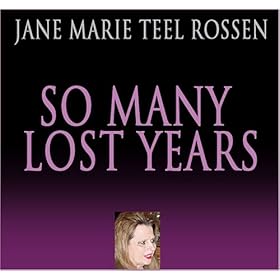
"So Many Lost Years," by Jane Marie Teel Rossen:

Elder Spousal Abuse and Murder

"So Many Lost Years" features a woman, married 48 years, who realizes about her mentally and physically abusive husband, Fred, "He's stolen my mind and body, and now I have nothing left. I'm a shell, just a dried-up shell of an old woman." This situation is well worth reading about by any woman trapped in an abusive marriage, regardless of her age. It may seem worse for older women who probably have fewer alternatives to remaining in abusive marriages. Any man with a tendency toward spousal abuse (or lack of compassion) should read it, too. The relatively short length of this story doesn't allow for the suspense that the creative plot twists should create, and the story suffers from inconsistent verb tenses. Still, it's based on an interesting premise, and that in itself makes it worth reading.


"Into the Sun," by Carmen Goldthwaite

A Powerful Tale of a War's Aftermath

While I have no personal experience with wartime loss, I lived through the era portrayed in this story: the Viet Nam war era. The three former ROTC students of this story, deceased husband and wife and best friend, bring to life the optimism of youth and some bittersweet memories as the delayed funeral of a missing pilot brings a type of closure for all involved. In today's world, it serves as a plea for the end of warfare.


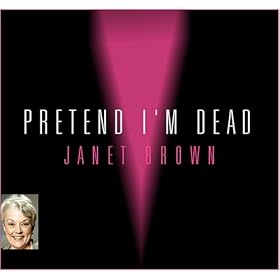
"Pretend I'm Dead," by Janet Brown

Dealing with Death

Janet Brown is an excelent writer, and this fifty-two page story kept my attention from beginning to end. A fifty-three-year-old woman, mother of three teenagers, faces the tragic death of her husband, and dares to love and marry again, but there are several twists in the "happily ever after" scenario. Death is not a cheerful topic, but it's one we all face eventually. Brown shows that spousal death is a worthy topic for fiction if one can appreciate the ironies, the twists and turns, the realities of life.


"The Death of Betty Pinto," by Judith Woodcock Colombo

Little Old Ladies are Human Too

Although I'm not a mystery fan, I was intrigued by this story set in an inner city soup kitchen. I applaud the author for her pictures of older people who seem real and worthy of writing about. The mystery is full of twists and turns, and if it has any flaw, it's that it could have been longer to develop the characters even further. All in all, it's an entertaining story.


"Merry Christmas, Miss Budge!" by Daphne C. Simkins

Christmas and Aging

As an elderly widow myself, I like this story because it reflects the discomfort of getting out of a cozy rut and experiencing new things, especially around the holidays. I'm no Miss Budge, but I admire her daring.


"Am I Wife or Daughter?" by Brenda Hill

A Common Dilemma

It seems that more and more women, especially, are being faced with the task of caring for one or more aging and/or disabled parents at the same time they are caring for their own families. This story portrays such a situation very well, and the reader is tempted to write a sequel. However, the sad thing is that there is no ideal solution for this problem, either in this story or in real life. It's a story worth reading and thinking about.

Amazon shorts: http://www.amazon.com/b/ref=sa_menu_sh2/103-1435355-6091001?%5Fencoding=UTF8&node=13993911

Copyright 2008 by Marlys Marshall Styne

Saturday, January 26, 2008

Diet Books: An Update

I just posted my review of Julia Cameron's The Writing Diet: Write Yourself Right-Size on my other blog, Write your Life! If you're not sick of dieting and dieting books yet, check it out.

http://www.seniormemoirs.blogspot.com